Photography with a Visual Impairment
Photography allows you to capture things that you see, in the perspective that you see it. Whether this is landscapes, nature, portraits, fashion or sport; photography covers many bases and is something that I have always enjoyed. But how do you take photos if you have a visual impairment? I have been asked this a few time and the more I thought about it, the more I realise why I have recently got back into photography.
I always have liked taking pictures of people or of nature/ landscapes, if nothing else, it allows you to keep the memory of that time and means you can look back at things you have done with your family and friends. When I moved to university I made sure my camera came with me, it was a hobby that I wanted to continue- unfortunately it sat on my shelf and was rarely used. This was probably due to the whirlwind of first year, yet when I look back I did miss it- and surely first year wasn’t that busy!
Another reason it didn’t get used last year was because I though I wouldn’t be as good, due to the way I now saw things. How are you supposed to take good pictures when the world isn’t as clear as it used to be? I certainly can still function with a blurred world, it’s only when you think back to how things used to be that you realise the difference. With my diagnosis being visual cortex disorder it means that it is heavily linked to my Cerebral Palsy, and that it has been a slow deterioration. However, once summer started I decided to give it another shot, because how hard could it be? I bought a new camera (something I had wanted to do for a long time) and started taking pictures. Every time we went on a family outing, along came the camera!
Over the last few months I have continued to take pictures, even purposely having ‘photo days’ and have enjoyed it more than I did previously. It is actually quite fitting to compare my eyesight to a camera. If you put it on a narrowed setting (to act as a loss of peripheral vision) and it was sightly out of focus, I’d say that’s pretty accurate to how I see. Similarly, if you are trying to get a camera to focus on a certain part but it keeps choosing another part of the image- this is also very relatable!
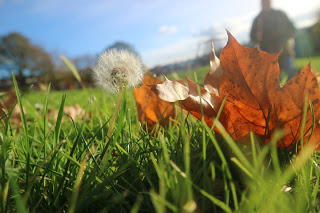
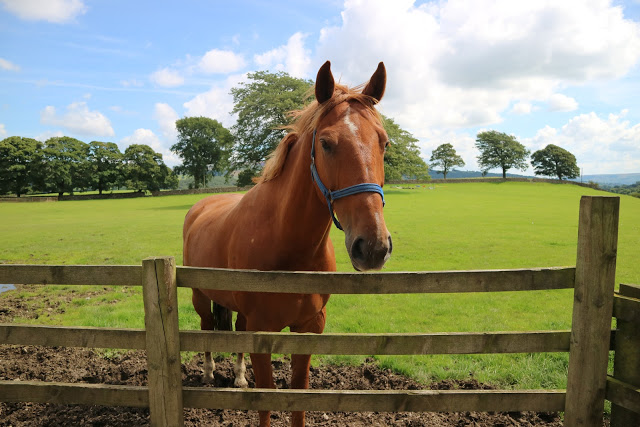
Here is a few picture that I have taken over the past few months:

Aside from taking pictures in the first place, my favourite part begins once I have uploaded them to my laptop. Once I see the pictures on this bigger screen it allows me to see all the detail that I would missed. I get to see all the individual leaves on a tree and all the different bricks that make up the building, or even the different textures on an acorn. These may seem trivial and meaningless, even something that isn’t needed to ‘function’. In a way that is true, I can get through life not seeing these details, but that doesn’t mean I don’t miss it. In the spectrum of sight loss I am extremely lucky, if I wanted to see some of the details I have mentioned then it would be possible if I was close enough, just not to the degree I would like or to the degree that everyone else might see things. Yet despite being lucky, that does not mean it is easy, and is still something that causes more frustration then I would like. It’s all just another learning curve.
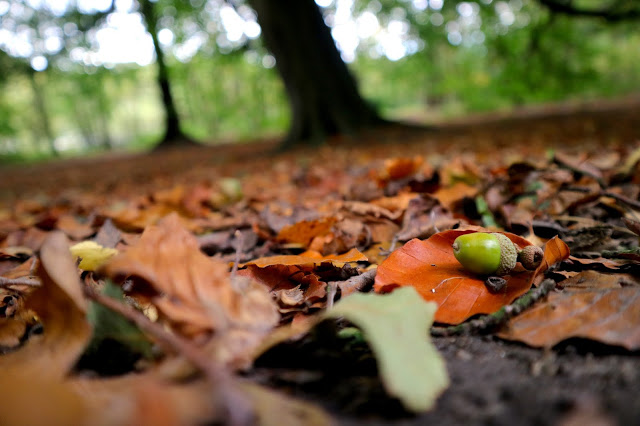
Another perk of using a camera means I am able to make it focus on one element of the photo- this definitely has to be my favourite part! The picture above shows autumnal leaves with the focus on one leaf and an acorn. Yet in the background there are many many more leaves and the bottom of trees in the distance. For me this represents what I should be able to see (the acorn) and how I do see (the background), just not quite to the extent that it’s blurred- which I think is important. It can be extremely difficult for my eyes to focus on a specific thing, especially if I am more tired than normal.
Can you enjoy photography with a visual impairment? Of course you can!
~ Chloe x
